

The web is evolving into an environment where artificial intelligence, digital payments, and the creator economy are redefining how we generate and share value. Against this backdrop, Brave is taking another step forward with BAT Roadmap 4.0, a roadmap that expands the role of Basic Attention Token (BAT), moving beyond rewarding user attention to introducing rewards for everyday transactions.
We spoke with Luke Mulks, Vice President of Business Operations at Brave, about this new chapter, the future of digital payments, and the challenge of building an online economy that does not have to sacrifice privacy to create value.
In the following interview, Mulks explores the key pillars of this roadmap, the initiatives currently under development, and his vision for the future of BAT and the digital economy.
Could you tell us a bit about yourself, your role at Brave, and your professional journey with the company?

I’m Luke Mulks, Vice President of Business Operations at Brave. I began working with Brave as a consultant and advisor in March 2016 before joining the team full-time later that same year. My background in media, startups, advertising technology (adtech), and product development allowed me to contribute from the early stages to shaping how we could develop business models that put users first and ensure privacy by default. This work evolved as we began tokenizing attention and expanding business operations and cryptocurrency-related initiatives within the company.
For those discovering Basic Attention Token (BAT) for the first time, what is it, and what is the big idea behind BAT Roadmap 4.0?
BAT versions 1 through 3 focused on tokenizing attention and creating value for users, with particular emphasis on advertising and creators, as these were the primary relationships involved in monetizing the web.
With stablecoins and artificial intelligence, the web is becoming much more transactional. Version 4 focuses on expanding BAT’s utility, shifting from earning rewards for attention to conducting transactions.
Users should be able to earn rewards everywhere: whenever they make purchases and whenever they interact with AI and AI agents. They should also be able to do so privately. Creators should begin earning revenue when AI uses their content, as well as when AI agents make use of it.
As part of BAT Roadmap 4.0, Brave is integrating BAT into more everyday experiences, including payments and rewards. What is the broader vision behind this expansion?
Since 2018, we have grown Brave Rewards to more than 10 million users. During that time, we have learned a great deal about how businesses want to engage with the web, how creators want to generate revenue, and how the advertising industry as a whole responds to new options and opportunities in the market.
Version 4 shifts the focus from attention to transactions. Every advertiser wants to know whether a purchase was made. Every user should be able to earn rewards when making transactions. Creators want to monetize their content and build their own businesses.
Ultimately, transactions are where attention and the attention economy approach become fundamentally important. Brave leads the market by delivering experiences that put users first.
We have also learned that it is possible to build momentum and bring millions of users into a better advertising system. However, when the parties involved in advertising are accustomed to relying on models built around third-party cookies, getting them to adopt a cleaner alternative becomes incredibly difficult.
By shifting the focus to the transaction level, we can gain greater control over our own future while keeping users at the center, giving them the tools to take action wherever they choose to transact.
Whether buying a sandwich or accessing premium content through x402, our model aims to create new opportunities for users to earn rewards without disrupting their experience.
Privacy has always been fundamental to Brave. How are you applying this philosophy as BAT and Brave expand into new products and experiences?
There has never been a more important time to focus on making private, scalable transactions accessible to everyone.
We are living through a particularly significant moment. For example, more than 120,000 Flock surveillance systems have been installed in communities across the United States without residents being informed. People are beginning to discover how these third-party companies operate, and how evidence appears to suggest that some say one thing while doing another.
People’s devices are connecting to their cars and transmitting information that these systems can capture and track.
Financial services are becoming increasingly interconnected digitally, while communities are seeing more and more businesses stop accepting cash. Without the ability to conduct private transactions, technological advances ultimately represent a step backward for privacy in the real world.
If we fail to provide private transaction options, especially in an environment where advertising collects so much user data, we risk ending up in a dystopian scenario where every transaction is tracked and linked to the profiles companies have built about us without our knowledge. Companies could use that information to discriminate against individuals.
Brave is uniquely positioned to lead by example and make a meaningful impact by developing privacy tools that our neighbors and families can use. The V4 roadmap focuses on transaction privacy alongside the ability to earn rewards.
AI is changing how people discover and consume content. What are you developing through the Creator Contribution Protocol to help creators earn revenue when AI products use their work?
Brave Search and Brave Leo were among the first to cite the sources of content used in AI-generated answers and responses to user prompts.
We are seeing declines in web traffic from search engines ranging from 20% to 90%, depending on the type of content, as AI-generated summaries become increasingly widespread.
Verified Brave creators should be able to receive royalty micropayments when their content is used in AI-generated responses and other applications.
Over the years, we have grown Brave Creators to more than 2 million verified creators and channels, and we see AI as a new avenue for supporting creators.
With x402 and MPP, new options are emerging for paying to access premium content and for interactive engagement. Brave supports x402 and MPP directly within the browser, while also providing facilitator support for our Brave Search API and other services.
Beyond the card, Brave is developing a unified Brave Wallet and a payment protocol called BravePay. How will these tools work together, especially for someone with little or no experience using cryptocurrencies?
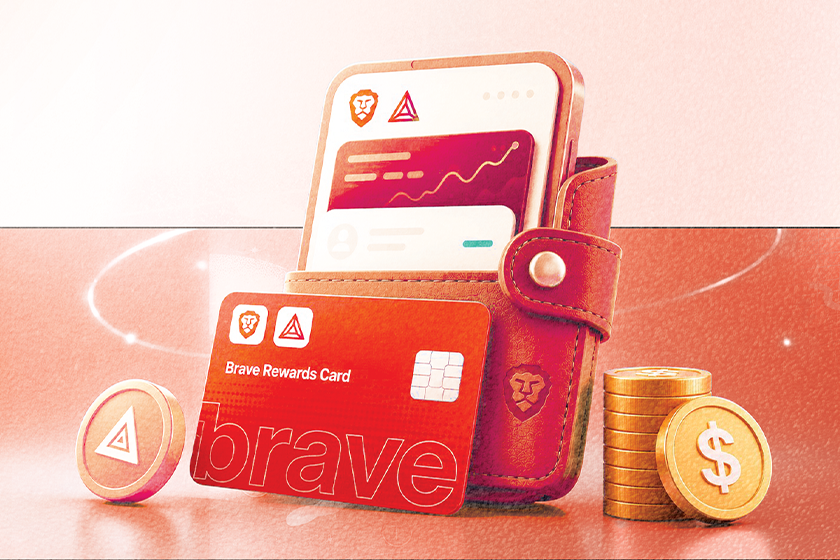
It has to be easy. As easy as transferring money from one account to another.
Currently, Brave Wallet is a cryptocurrency-specific wallet that operates independently of the payment methods users save in their browsers for online purchases.
The first step toward reaching audiences beyond existing cryptocurrency users is to give cryptocurrencies the same level of importance as other payment methods and accounts by integrating them into a unified wallet.
That wallet needs to offer a Venmo-like user experience while incorporating self-custody. No one has done an exceptional job in this area, and even apps like Venmo and PayPal keep cryptocurrencies separate from traditional payment methods.
BravePay will feel like an account for everyday users. It will allow them to onboard to a protocol that feels like cash and works like any other payment method within the wallet.
Users will be able to make transactions and earn rewards through BravePay. With a simple onboarding process and the ability to use .brave domains for human-readable, easy-to-remember addresses, we will address major barriers to adoption.
Over time, we will integrate BravePay with the Brave Rewards Card and merchants.
The upcoming Brave Rewards Card will bring BAT rewards to everyday purchases. How would someone use it, and what makes it appealing compared to a traditional rewards card?
To expand cryptocurrency adoption, the industry needs to meet new users where they are.
Payment cards are something of a Trojan horse for expanding the adoption and use of stablecoin payments beyond existing cryptocurrency users and institutional groups. Once someone starts using a stablecoin-backed card, the experience feels just like using any other payment card.
This also means users will be able to use the Brave Rewards Card outside of Brave Wallet and the Brave browser, including through Apple Pay and Google Pay.
In addition to its integration with digital wallets, the Brave Rewards Card can be used with Amazon accounts and loyalty apps to combine the card’s transaction rewards with rewards from other programs.
A percentage of the revenue generated from transaction activity will be used to programmatically buy back BAT. These tokens will be allocated to transaction rewards for Rewards Card users and other Rewards and Brave Wallet activities. This is particularly important because the current model relies on advertiser spending.
We are a user-first company. Tying demand dynamics to users’ transactional behavior is more closely aligned with our philosophy and creates new forms of utility for BAT and its holders.
Users are familiar with the idea of earning stars through the Starbucks app. BAT can work in a similar way as a reward unit within Rewards.
Another advantage is that users can passively earn cryptocurrency through their everyday activities. We have already seen the potential of this model by allowing people to browse and earn rewards.
When rewards are earned through routine activities, users do not have to overcome a series of barriers to get started, as is often the case with other programs.
Furthermore, this can serve as a gateway to innovation in decentralized finance (DeFi), through a more accessible presentation of products and marketing strategies that bring tangible value to the user experience.
More than 190,000 people have already joined the card’s waitlist. What does this response tell you about what people are looking for in digital payments and rewards?
By the time this article is published, we will have surpassed 200,000 waitlist sign-ups by a significant margin.
This represents a significant signal of demand from early adopters that we cannot ignore, and a very strong indication that the V4 roadmap is moving in a promising new direction.
The roadmap proposes using a portion of the revenue generated by the card, Brave Wallet, and BravePay to fund BAT buybacks. How does this model aim to connect everyday product usage with rewards and the growth of the broader BAT ecosystem?
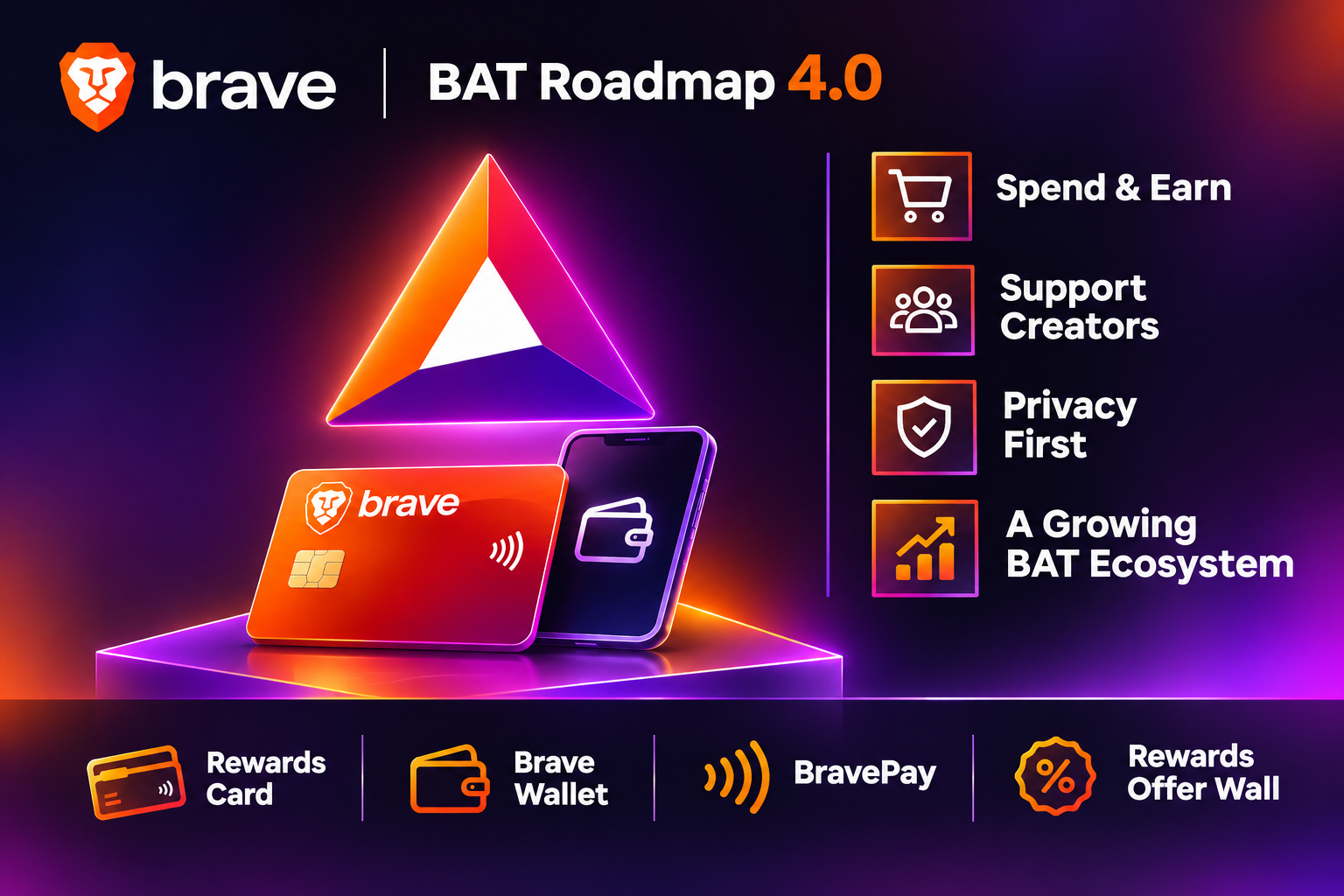
Rewards Card users will receive a percentage of each purchase in the form of “bat-back” rewards, at competitive market rates. These rewards will be displayed in two denominations to make them easy to understand.
The card will not be the only way to earn rewards. The Rewards Offer Wall, integrated into the browser, will feature offers and benefits for Rewards users, with cashback or bat-back rewards on their purchases.
Brave Wallet users who use revenue-generating wallet features will also be able to earn rewards from that activity.
To reach audiences beyond existing cryptocurrency users, the program must offer rewards that work without requiring any knowledge of crypto assets and that can be compared with and compete against other rewards programs.
There are numerous ways to lock up assets, restrict access through tokens, and use cryptocurrencies in an abstract way to advance through levels or tiers within a rewards program or gain access to certain benefits. This is one of the areas that has seen the most development and innovation within the crypto ecosystem.
What has been missing is an approach that makes these solutions accessible to the next wave of potential users.
It has to be easy. These users do not care which blockchain is being used. They just need it to work, and to work in a way that feels familiar to them.
As you develop BAT Roadmap 4.0, what would success look like for everyday users, and how can readers help shape what comes next?
We have a very active BAT and Brave community, and we host weekly BAT Community Calls that are open to the public. These provide a space for conversations, discussions, and open Q&A sessions between users and the team.
We are also developing Brave Wallet testing programs for early adopters. Likewise, those who have joined the Rewards Card waitlist will have opportunities to share feedback and suggestions to help us build a program they genuinely want to use.
All of this is part of Brave’s DNA and how we have grown to our current scale. And it will become even more important as we continue to grow.
Success for V4 means Brave will provide users with a web experience that creates value and complements what we already offer through our products.
Not only will you have the best free YouTube experience, but you will also be able to earn rewards while enjoying it.
This is part of the philosophy and vision that Brave has always brought to the market. We have now reached a point where the technical capabilities and societal need for this approach have converged. Brave is uniquely positioned to deliver these solutions and lead by example, just as it has done since 2015.
With BAT Roadmap 4.0, Brave envisions a future where earning rewards, making payments, and participating in the digital economy should be as simple as browsing the internet, without giving up control over personal data. Integrating BAT into new payment experiences and creating monetization opportunities for creators reflect an effort to connect technological innovation with the real needs of users.
The challenge will be turning this vision into accessible tools that can reach beyond audiences already familiar with cryptocurrencies. For Brave, success will depend not only on BAT adoption but also on demonstrating that a more useful, open, and private web can create value for the people who use it.
